Spay & Neuter Procedures
Help your pet live a long, healthy life.
Deciding whether to spay or neuter your cat or dog can be a difficult decision for some pet owners. Although the thought of your pet having surgery may seem scary, we’re here to assure you that spays and neuters are common surgeries that are safe, simple, and generally quick.
How can my pet benefit from sterilization?
Spaying and neutering help pets live long, healthy lives. Having pets sterilized while they’re young reduces their likelihood of developing certain infections and cancers. Plus, it combats overpopulation which, sadly, leads to the euthanasia of pets who cannot be placed in good homes.
Other common issues that spaying and neutering help prevent include:
- Expensive and potentially life-threatening uterine infections are called pyometras. Luckily, they’re 100% preventable if your pet is spayed.
- Cancerous mammary tumors can spread to other parts of the body. If you spay your female pet prior to her first heat cycle, you’ll significantly reduce the likelihood that she’ll develop tumors.
- Testicular cancer and infections can lead to malignant or benign swelling of the prostate.
- Unwanted behavioral problems such as aggression, territorial marking, and roaming.
What happens when a pet is spayed or neutered?
Pets are placed under general anesthesia to perform spay and neuter procedures.
Both procedures are performed through small incisions used to remove certain reproductive organs. After a spay or neuter, the incision is closed with sutures and the patient rests in a recovery ward until they are ready to go back home with you!
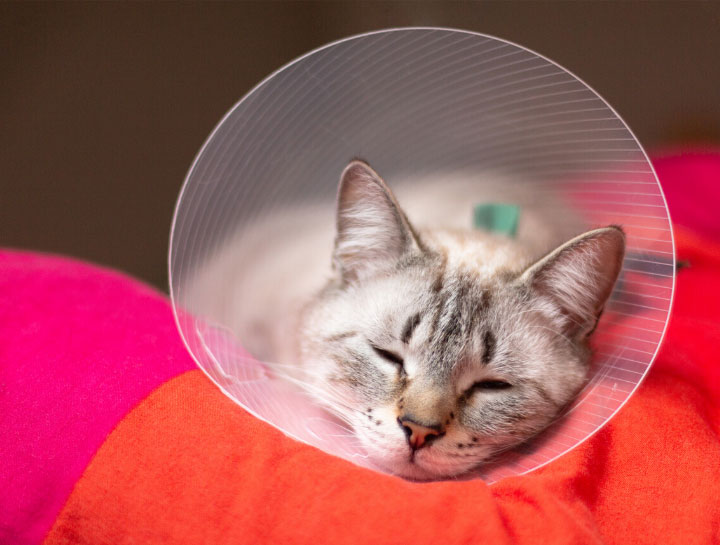
After surgery, your pet may be required to wear a special collar designed to prevent them from chewing their sutures for several days. It’s likely they’ll appear sleepy or groggy after surgery, and you might notice redness, swelling, or a little bit of blood surrounding the surgery site. That’s normal. If you become concerned about your pet’s health or behavior following surgery, call your veterinarian to let them know. Your pet's doctors will see to it that all your questions are answered and that your pet is back to normal in no time.
If you have questions about getting your pet spayed or neutered, or you’d like to schedule an appointment, give us a call at (903) 201-4612 or request an appointment online.
Community Care Spay & Neuter Program
We understand that many in our communitry face financial challenges. Our goal is to provide accessible, high-quality veterinary care to help pets live longer and healthier lives without the long wait times or limitations of traditional low-cost programs.
We are proud to now offer reduced-cost services while maintaining safe and effective medical standars. To help keep costs low, some modifications are made to standard procedures. All details, including anesthesia protocols and associated risks, will be fully discussed prior to surgery.
To qualify for these reduced cost services, requires proof of these criteria:
- Sincle income less than $30,000/year
- Dual income less than $55,000/year
If you qualify and need to get your pet spayed or neutered, send an email to LACSpayNeuter@gmail.com with the following information:
- Your name, address, phone number and email address
- Your pet's name, canine/feline, breed, and age
- Proof of a current, up-to-date, rabies vaccination, if available
Once our team has reviewed your information, you will be contacted to schedule a pre-surgical appointment.
Be sure to also check out our Community Care Vaccination Services.